
Back from
too short family holidays in Italy. This time we had rented a house on the Sorrentino
Penisula, perhaps more known for its Amalfi Coast, close to Capri, Vesuvius …
and Naples.

“Forgetting”
Paris for a while, let me first show you something from Naples.
My
beforehand idea of Naples was to a large extent linked to narrow streets,
balconies, drying linen … I got it confirmed.


In the “old
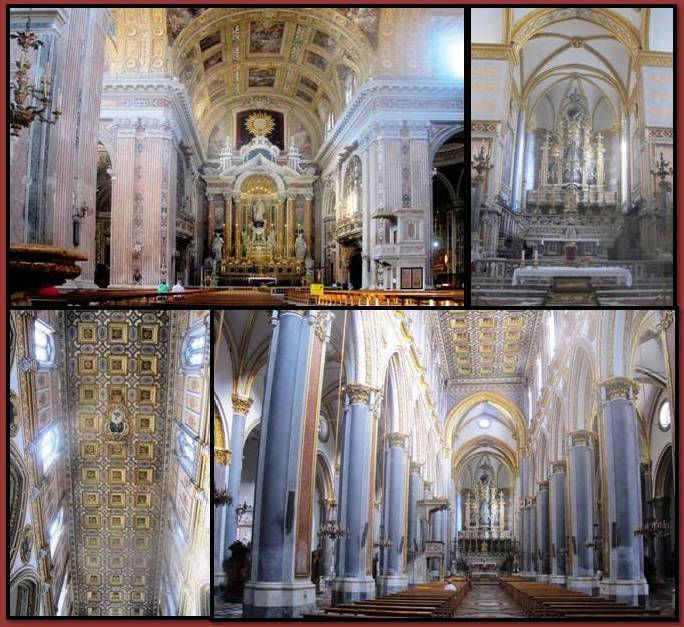
town”, there are a number of monuments (sometimes tagged, sometimes invaded by a
bit of wild grass..), tens of churches, beautiful, but mostly with restricted photo
rights. I was especially impressed by a number of sculptures, statues, in the
Sansevero Chapel, more particularly by the “Veiled Christ” (1753, by Giuseppe
Sanmartino). The picture is from Wikipedia.



Naples is clearly
linked to the “pizza”. Although pizza-like food has been eaten since thousands
of years, the modern “pizza” that we know was born in the 19th
century, when tomatoes, with origins in the Americas, became an important
ingredient. Purists consider that there are only two real “pizzas”, the Marinara
and the Margherita, named after Queen Margherita, evoking the colours of the
Italian flag - green (basil leaves), white (mozzarella) and red (tomatoes). A
few pizzerias claim to be the best, the traditional ones. Of course we had to
line up.

There is a
more monumental-type of surroundings close to the medieval Castel Nuovo, the 17th century Royal Palace, one of
the homes of the Kings of the Naples, of the Two Sicilies (and for a short
while of Joseph Bonaparte / Julie Clary, followed by Joachim Murat / Caroline
Bonaparte), the Teatro San Carlo, the Piazza Plebiscito, the San Francesco di
Paola Church, the spectacular Galleria Umberto… .


With a lot
of courage (especially in hot weather), you can climb the several centuries old
steps...

... to the top of Naples, to find the Castel Sant’Elmo and especially the
Certosa di San Martino, a former monastery, closed during the Napoleonic years,
today a museum, constructed between the the 14th and 17th
centuries, fabulously decorated. The statue of the Virign is by Pietro Bernini,
father of the even more famous, Gian Lorenzo Bernini.


The views over Naples and
Vesuvius are already worth the climbing.


 Posts




