
In front of
the Saint-Sulpice Church (see here) you
can find the impressive Saint-Sulpice Fountain, designed by Louis Visconti (1791-1853), who for
a while, under Napoleon III, was the official architect of the Louvre, but also is known for the Molière Fountain (see here) and especially for the tomb of Napoleon
I (see here).
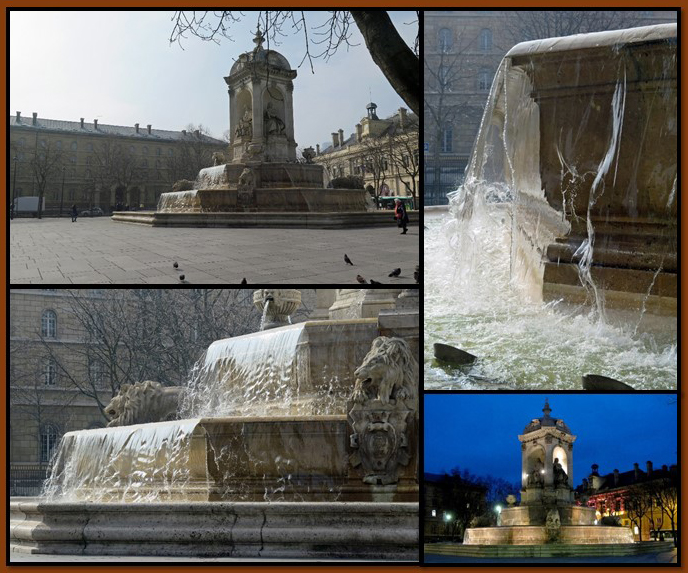
The
fountain was finished in 1848 and is the place for four eminent religious
figures of the 17th century, all known for their eloquence. They are facing, respectively north, east, south and west – the points of the compass,
the cardinal points. This has led to a play on words (which works in French):
The fountain is often referred to as that of the “quatre point(s) cardinaux”,
which with the “s” simply refers to the points of the compass, but without the “s”
indicates that the four never became cardinals. The pronunciation is the same.
Here are
the four non-cardinals:
North: Jacques-Bénigne
Bossuet (1627-1704), bishop (of Meaux), court preacher, by many considered to
be one of the most brilliant orators of all time. (Statue by Jean-Jacques
Feuchère (1807-52).)

East: François
de Salignac de la Mothe-Fénelon (1651-1715), commonly known as François
Fénelon, archbishop, royal tutor, poet and writer (The Adventures of
Telemachus). (Statue by François Lanno (1800-71).)

South: Jean-Baptiste
Massillon (1663-1742), bishop (of Clermont), preacher. (Statue by
Jacques-Auguste Fauginet (1809-47).)

West: Esprit
Flechier (1632-1710), bishop (of Nîmes), preacher and author. (Statue by Louis
Deprez (1799-1870).)


 Posts
Posts




