7.6.12

A marina


This is not Saint Tropez, but there are some days, when you almost have the feeling.

We are in the Port de l’Arsenal (Bassin de l’Arsenal), which got its name from an arsenal which was located here between the 16th and 19th centuries. The port was constructed during the 19th century where previously was just a ditch to draw water to the moats of the Bastille fortress. The Bastille was of course destroyed July 14th 1789 – and the following days. Some of the stones of the Bastille and its defensive structures can be found in the present walls of the basin.

Initially a commercial port, connected to the Seine via a lock, it was converted into a leisure port, a marina, in the 1980’s. It’s also the entrance to (or the exit from) the Canal Saint Martin, via a tunnel… I already posted about the Canal Saint Martin (here), about the Bassin de la Villette (here) … and of course about the Bastille (here and here), so I will stop the “history” part here. :-)


You find a mixture of yachts, transformed barges…


… and also a park-like environment, with roses…


… lawns…


… and some space for refreshments. 


4.6.12

Tennis


I used to be a regular visitor to the French Open – Roland Garros tournament, maybe - I must admit - more during the Björn Borg / /Mats Wilander/ Stefan Edberg years.

Since 2008, there in another, cheaper, way to watch the tournament; in front of the Paris Town Hall (see previous posts) a gigantic kind of tennis court offers chairs, tables, parasols … and a giant screen – all free of charge. It will all stay there until the end of the tournament, June 10.


Most people take the chance to watch, relax, get some suntan…


... but if you wish, you can of course measure your serve speed in a “smash corner”.

The reflection of the typical red court gives the Town Hall some pink colours. 
... and please note that there is a little extra post today, look further down!


A little extra post.


Five years ago, I made some posts about a bird in “my” park, which with the help of some blogger friends we found out to be a Bar-headed Goose, obviously the world’s highest flying bird, found at almost 11.000 m (36.000 ft), when overflying Himalaya – with a margin! She, or one of her friends, is again covering three eggs. It seems that she has to remain like this for other two or three weeks…   hopefully with a luckier result than five years ago. I will try to survey.


Another bird was already a lucky mother; some seemed to have some family planning in mind…

31.5.12

Orsay Museum


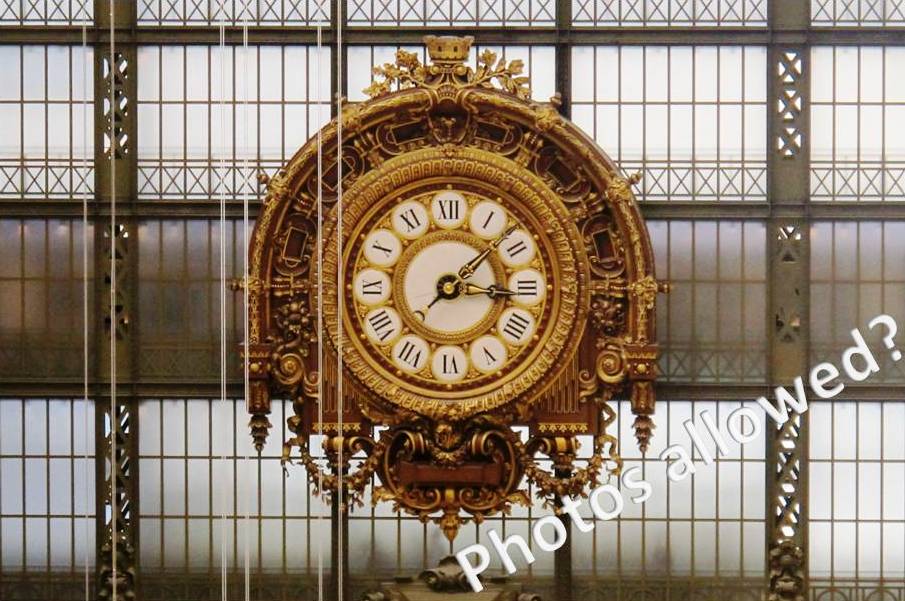
After five years of blogging about Paris, I have not yet made a post about the Musée d’Orsay. I have hesitated, taking into consideration that photos from the inside are not longer allowed. The rules vary from one museum to the other; photos are e.g. allowed at the Louvre…

I can somehow understand this interdiction. It’s quite frustrating when you reach the Mona Lisa at the Louvre and hardly can see it because of a crowd of people taking photos of the painting and their wife or husband standing in front of it. I think more and more that art in museums is to be seen, contemplated… forgetting about the perfect photo for your blog or your personal album. … and now, if you wish to see e.g. the Orsay collection on your computer screen, you can just go to the “Google Art Project” and find 225 artworks by 130 artists or to other sites about this museum.

But to be able to show the architecture of the interor is something different. I thought that I could be allowed to show one or two photos of the stunning interior of the building, which was first built as a railway station, built for the Universal Exhibition of 1900. From 1900 until 1939 the Orsay Railway Station, which included a hotel, was used as the head of the railway lines leading to the southwest of France and later for some suburb lines. It closed in 1973. There were some plans to replace the building by a modern hotel, but finally – and fortunately – the decision was made to classify the building and transform it to the museum it is today, opening in 1986.


There is of course, until further notice, no problem with taking photos of the exterior.


The station was originally built for the “Compagnie du chemin de fer de Paris à Orléans”, known as “PO”. You can read the different destinations the trains wen to written on the building – Bordeaux, Toulouse, Limoges… 

... and also the “PO” (which I could use for my personal initials). 

The great clocks can be seen from the outside as well as the inside.


So, today, to see the fabulous art collection, covering the period 1848-1914, including some 5.000 paintings (Bashkirtseff, Bazille, Bernard, Böcklin, Bonheur, Caillebotte, Cézanne, Corot, Courbet, Degas, Daumier, Delacroix, Fantin-Latour, Gauguin, Ingres, Jongkind, Klimt, Manet, Millet, Monet, Moreau, Morisot, Pissarro, Redon, Renoir, Rousseau, Seurat, Signac, Sisley, Toulouse-Lautrec, van Gogh, Vuillard…), some 2.000 sculptures (Bugatti, Degas, Rodin…), photos, architectural designs (Baltard, Guimard…), medals, other artwork (Christofle, Gaudi, Guimard, Tiffany… ) the best is to go there (together with some three million other annual visitors), or possibly to look on the Google selection. 

28.5.12

Aix-en-Provence


Before “returning” to Paris again, another post from my recent trip to Provence, this time about Aix-en-Provence.

Several cities have the name of Aix, the origin of this name being the Roman Aqua, for water. The Romans looked for hot water springs and gave this city the name of Aquae Sextiae, founded in the year 122 BC by Gaius Sextius Calvinius as the first Roman city in what today is France - after the destruction of a Ligurian oppidum just north of the present city.

Today Aix-en-Provence is a major cultural centre with its important university, its music festival during the summer weeks… and also with different public institutions like an important Appeal Court.

As many cities in the south, Aix-en-Provence has a definite, particular, atmosphere, light… and the high number of students brings a lot of life to the city (also late nights), full of cafés, beautiful several centuries old “hôtels particuliers”, open places, squares… .


I found this particular light and atmosphere also during a visit here in January this year, although the trees were naked.


There are of course a number of churches, including the Cathedral of the Holy Saviour (5th – 17th century)…


… and not only church towers but also the one of the Town Hall from 1510.


As said, the hot water springs attracted the Romans and there are numerous fountains around the city, including very ancient ones on the central street, Cours Mirabeau, covered by moss and other vegetation, and the more recent Rotunda Fountain.


Aix is also an artist city, particularly known for having been Cezanne’s home town. The different paintings he made of his beloved Sainte-Victoire Mountain are especially well-known. The studio he built north of the city centre can be visited (but not photographed inside). The trees of the surrounding little park have grown since.