16.2.15
12.2.15
Behind this door was a theatre...
There are
two buildings facing each other, Rue de l’Ancienne Comédie. One of them is
quite well known to most of us, the restaurant / café “Le Procope”. It opened around
1686 and is generally considered to be oldest restaurant still in operation in
Paris and with a lot of its own history, especially during the revolutionary
years.
But this post is rather about the building on the opposite side of the street.
At that time, official theatre companies and actors were named (designated) by the Royal court. They moved around a lot,
but finally found a rather long-lasting place to perform - in this building. They moved in three years after the opening of “Le
Procope”, in 1689, after having transformed a “jeu-de-paume” (the predecessor
to our modern tennis) court to a theatre and played here until 1770, which means
that many works have had their world-première here with authors like Voltaire,
Diderot, Beaumarchais… Among the first actors and actresses, who were referred
to as the “comédiens ordinaires”, you may mention Armande Béjart, Molière’s
widow – Molière was already dead, in 1673. It’s obvious that this part of the street
was very much in fashion during a number of decades - actors, authors,
intellectuals, nobility…
What we
refer to as the “Comédie Française” had actually been founded by Louis XIV, by merging
different “companies” a few years earlier, in 1680, before the opening of this theatre,
but it took some time to find a suitable place for performances. As said above,
the theatre company remained here until 1770 and after moving around again for
a while, they finally settled in a fixed theatre, in 1799, the theatre we know
today (although of course remodeled since) at the Palais Royal (see previous posts here).
So, what
can we find of this 1689-1770 working theatre? Not much. The front building has
got one or two additional floors since then. What remains of the original façade
is a sculpture representing “La Minerve”, executed by Etienne Le Hongre
(1628-90), who has also left a number of statues around the Louvre, Versailles…
.
I have searched
rather desperately to find information about the theatre, but have been able to
find only very little information (I was able to “steal” only one recent artistic drawing of what the theatre may have looked like - see the lower left corner on the below collage), nothing about the when it
was demolished… .
When you open the gate you will find a courtyard. Obviously this is where the theatre once stood. Where the stage
curtain once was would correspond to the modern building / façade which
obviously dates from 1989, but seems to be completely abandoned. I also
understand that the “Comédie Française” used the premises for some time as a
storage space. I would be happy to learn more, if someone knows…
Labels:
Paris 6
9.2.15
Some odd photos, statues…
Some odd
photos, which I have not been able to incorporate in any “real” blogposts.
This is a
statue, called “La Seine”. You can find it close to the Pont d’Alma. The
sculptor is Gérard Choain ( 1906-88). He obtained the “Grand prix des Beaux
Arts de la ville de Paris” in 1962 for this one. Gérard Choain has made a
number of monuments which you can find in France and abroad, e.g. a monument
dedicated to the Mauthausen deported at the Père Lachaise cemetery.
Very close
to this statue you can find another one, “A la France, la Belgique
reconnaissante, 1914-18” (see also top picture). It has been here since 1923 and is a gift by Belgium in recognition of the Belgian-French friendship during WWI. The sculptor is Isisdor de Rudder
(1855-1943). Two ladies representing the two nations face each other, the
French one with her Phrygian cap, the national Marianne emblem. The exact
address where you find it is Place de la Reine Astrid. Queen Astrid was born as
a Swedish princess (Bernadotte) and was later married to the Belgian King,
Léopold III. She died accidentally in 1935. She was the mother of the future
Kings, Baudouin I and Albert II and grandmother to the present king, Philippe.
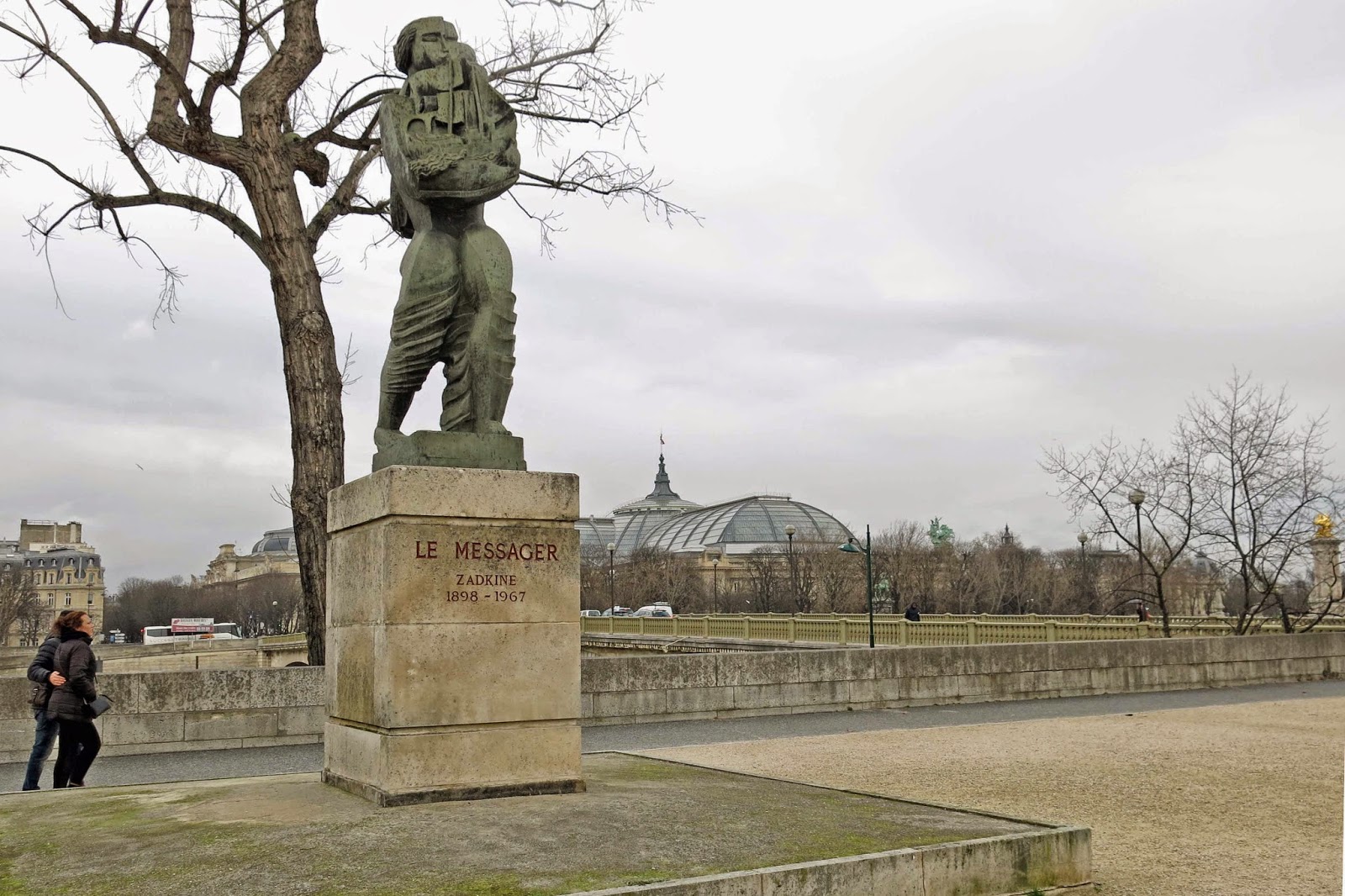
A third
statue, a bit further away, close to the Pont des Invalides, is named “Le Messager”,
(the Messenger), by Ossip Zadkine (1898-1967). This is a bronze copy of an original wooden sculpture
which was placed here to decorate an Exotic Wood pavilion, part
of the 1937 Paris International Exposition – when the Palais de Tokyo, the Paris Museum for Modern Art, the present Trocadero installations… were also opened, when
Picasso’s Guernica was exhibited at the Spanish pavilion… .
The statue seems
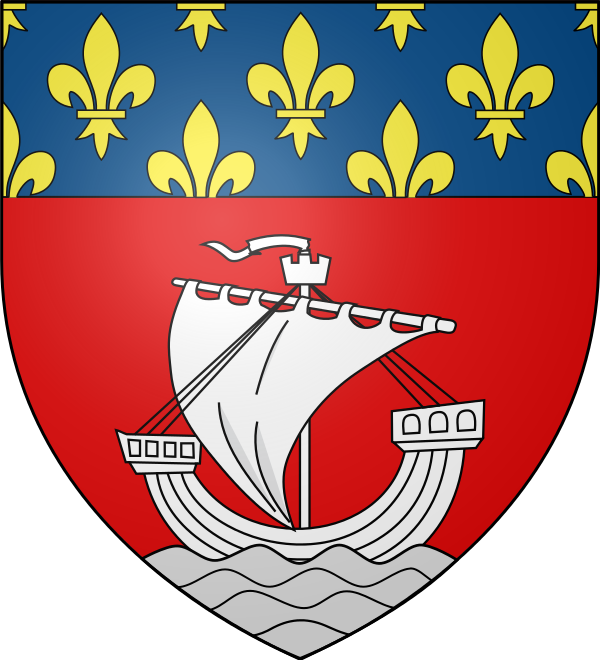
to have other names as well – “Le porteur des présents” or “Le navigateur”. I don’t
know if it was meant so, but the little ship we can see may refer to the one we
can see on the Paris coat of arms, originally the symbol of the 14th
century powerful corporate “Marchands de l’eau” with the motto “Fluctuat nec
mergitur” (She is tossed by the waves, but does not sink). This corporation, controlling
the river traffic, ended up as the Paris municipal representation.
Here we can
see (photos “stolen” from the net) what the German and Soviet pavilions, facing
each other, and what the Exotic Wood pavilion (where you can see Zadkine’s sculpture
facing the river) looked like during the 1937 event.
Zadkine has
a number of statues around Paris, a street name and his own museum. I talked
about it in my previous blog, here.
Of course, nothing to do with this, but...
… and to finish this post, I would like to show
you a rose, which has resisted the (so far fairly mild) winter.
5.2.15
The Paris sewer system
You can
visit a little part of the Paris sewer system. The entrance is close to Pont d’Alma.
You can read more about it here.
Actually what
you find today underground is a combination of the sewer system and the double
water supply network, drinking and non-drinking water. The same corridors and
tunnels are used. All in all there are today 2.400 km (1.500 miles) of tunnels.
Walking
around for about an hour, you will notice that the water leaving our buildings
and streets is not quite clean. It’s good to know that it’s not going back to
the Seine as such, but is brought far away and well cleaned before finally
finding its way back to the river, far away downstream.
You will be
taught the history of how Paris has taken care of its water supply and sewer
system from ancient times until today and you can also see some of the tools in
use, or previously used. The different corridors have the corresponding street names indicated.
Labels:
Paris 7
2.2.15
Subscribe to:
Posts (Atom)