18.8.16

Apulian holidays (3)


A third report from our Apulian family holidays; first some words and pictures from Lecce, a historic city, with some still visible remains from Roman times…


… but especially rich in baroque architecture.


The cathedral has origins from the 12th century, but was completely restored during the 17th century.


We also visited the Castellana Caves – Grotte di Castellana (see top picture) during a more than two hour walk – 3,3 km (2 miles).  The main enormous entrance cave, La Grave, has a hole on the top and the view from there (first picture below on the left) is impressive. The cave in its total length was discovered as late as 1938. It’s fascinating to admire all the stalactites, stalagmites… in all colours – all in a nice cool temperature. 


15.8.16

Apulian holidays (2)


Although the house we rented offered a very nice swimming pool, there is always a wish to find the sea. The Adriatic coast line, down in the south, offers a beautiful landscape with a mixture of cliffs and beaches… and crystal clear water. Here are some examples of what we experienced.

Polignano a Mare, situated on cliffs has, like many other cities here, a long history – Greek, Roman, Byzantine, Venetian… and offers a lot of charm. 


The Santa Maria Assunta church has a beautiful interior behind an austere facade.


Perhaps it should be mentioned that Polignano is directly linked to the song “Volare” (through its creator and performer Domenico Modugno)… but the main attraction, at least during the warmer season, is obviously the cliff-surrounded beach, which sometimes proposes diving competitions. (We made our way through the crowd by walking.)    

Going southwards, you find a number of sometimes less populated beaches.

Another spectacular cliff diving place is Torre dell’Orso (see also top picture)...

… close to other beaches at Otranto.


Reaching the extreme southern coastline you can find miles of sand beaches, referred to as the Apulian “Maldives”. 


11.8.16

Apulian holidays (1)


When I have been travelling I take the liberty to “forget” about Paris for a while and make some "reporting" about the new places I have visited. For a couple of years, together with kids and grand-kids, we rent a place somewhere to spend a few summer weeks together. This year we opted for an Italian region where we had not yet been – La Puglia (Apulia), more or less the heel of the Italian boot.

The first pictures are from the city of Bari – where I landed - and spent only a few hours.


In the oldest part of the town, you find the Basilica di San Nicola, built during the 11th and 12th centuries with some Byzantine influence. As many other churches in the region, there is a fantastic ceiling, added during the 17th century in baroque style.  

The Bari Cathedral dates from the 12th and 13th centuries. The underground crypt has later been added in baroque style.

A little glimpse of the house we had rented, close to the little city of Carovigno. Surrounded by olive and almond trees – as large parts of the region - the building has been added to some old “trulli”. (One “trullo” – my sleeping room - can be seen on one of the pictures. There is another one behind a tree).

A “trullo” is a traditional dry stone hut with a conical roof, typical for the region. The highest concentration of “trulli” is to be found in the little town of Alberobello – see also top picture. There are totally some 1500 of them, the majority (including a church) can be found on one side of the main street, named “Monti”. Most of them are now shops.


On the other side of the street, named “Aia Piccola”, much less touristic, the “trulli” are still living quarters.


I will be back with more information about the other red spots on the map below.   

22.7.16

Off for a while

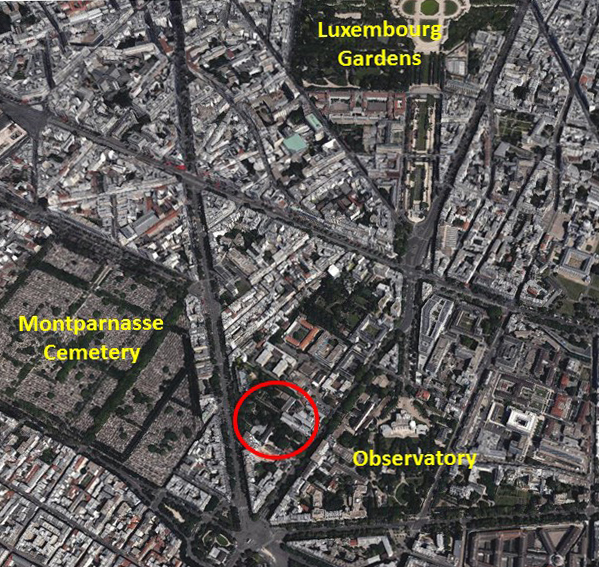
I will not be posting for a while. I will spend my time with family and within the red circle. Should be back blogging mid-August. 


21.7.16

Temporary occupation – “Grands Voisins”


A large space which was occupied by the Saint-Vincent-de-Paul hospital until 2014 is – temporarily – occupied, with official authorizations and encouragements, by a number of social activities. Some of the buildings offer accommodations for needy people, for immigrants… but there is especially a wish to offer a mixed cohabitation with a number of other activities – coexistence between occupants and visitors – most of them with emphasis on culture, ecology….  Here it’s possible to sleep (there are even some camping tents), to work, to shop, to eat and drink, to enjoy yourself… - somehow a follow-up of the message by the man who gave his name to the abandoned hospital – Saint Vincent de Paul, the “Great Apostle of Charity” (see previous posts about him here and here).


In a year or two, this area will be transformed into an “eco-quartier” offering more permanent housing, but a touch of the present temporary activities are supposed to be integrated, the spirit to survive.