12.5.16

Sitting on the rails...


As last year, one has the possibility, during the warmer months, to visit what used to be a repair and maintenance workshop for the French Railways. Such activities started here in 1845 and were abandoned in 2014. In the meantime, the premises had of course been modified, especially during the 1930’s.  Before demolition starts in 2017, making place for housing and commercial installations, the premises are for a second time open to public – until October 16.

The event takes place in cooperation with the French Railways and a number of old locomotives and rail cars can be seen, including a beautiful steam locomotive and a “Trans Europe Express” passenger car (which reminds me of some previous trains - slower than the TGV, but - nice for travelling, with real and often excellent restaurant service….).


During the coming months you can enjoy a number of activities here, including eating, drinking, shopping, listening to concerts…


The open space is used for gardening, bee hives… and for just sitting down with a glass, a book, an iPad… (I was here rather early in the day – I imagine there were difficulties to find a seat later during this very warm spring Sunday.)


Here is where you can find the place. The street in  front (rue Ordener) is on Sundays occupied by a (flea) market. This is also where you can find one of the authorised street art walls (on which I reported previously, see here). 


9.5.16

L'Olympia


The famous music hall L'Oympia opened in 1889 (created by the man who also created Moulin Rouge). The first star performer was actually “La Goulue’, considered as the first (Moulin Rouge) cancan dancer and often portrayed by Toulouse-Lautrec (I wrote about her several times, e.g. here). I’m not going to tell the whole story of the Olympia here, but… After some decline, the Olympia became a movie theatre in 1929. The music hall we know today actually got started in 1954 under the leadership of Bruno Coquatrix. The economy was often bad and some artists, like Edith Piaf, sometimes performed for free to help. When Coquatrix died in 1979, the Olympia was again seriously threatened for years (to be transformed into a parking lot…), but on a ministry order in 1993 it was saved, to large extent rebuilt, but keeping its architecture…

Here is a short list of some of the artists who have appeared here:
Aretha Franklin, Beatles, Beach Boys, Billie Holiday, Björk, Bob Dylan, Celine Dion, Charles Aznavour, Charles Trenet, David Bowie, Diana Ross, Edith Piaf, Elton John, Frank Sinatra, Georges Brassens, Gilbert Bécaud, Ginger Rogers, Iggy Pop, Jacques Brel, James Brown, Janis Joplin, Jeff Buckley, Jimi Hendrix, Josephine Baker, Lady Gaga, Led Zeppelin, Leonard Cohen, Liza Minelli, Louis Armstrong, Madonna,, Maurice Chevalier, Miles Davis, Mireille Mathieu, Amalia Rodrigues, Ray Charles, Rolling Stones, Serge Gainsbourg, Tina Turner, Yves Montand…

I have of course been to concerts here, but then photography is complicated, not allowed… At present (until June 15) there is an exhibition which allows you to see part of the interior, get some history of the place…

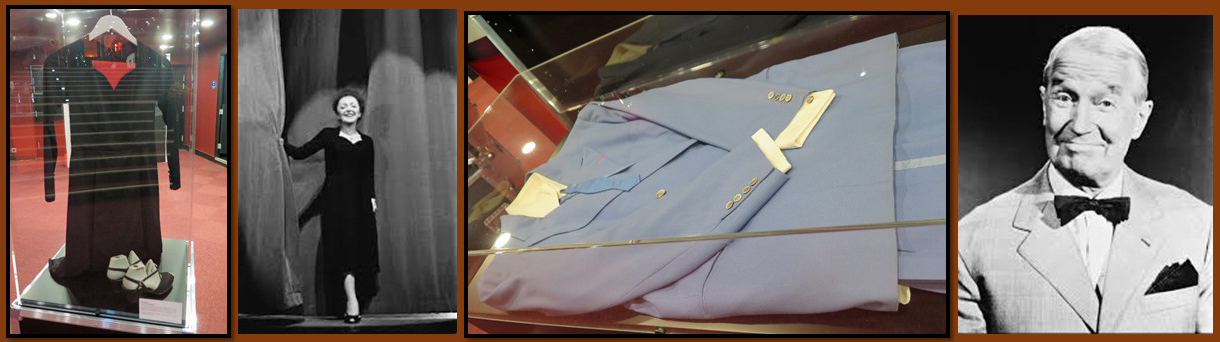
In the large vestibule different items are exposed, e.g. the scene costumes worn by Edith Piaf, Maurice Chevalier and others.  

You can visit the so-called billiard room, wonderfully decorated. It was obviously once used as a place for rehearsals. During the exhibition you can watch excerpts of different artists' performances.

Normally you are not admitted into the concert hall during these visits, but I was lucky – a member of the team preparing the coming night’s performance let me in.

When you see where the back stage entrance is situated, you realise the size of the installations.


To conclude, shall we listen to Jacques Brel and Edith Piaf performing at the Olympia?


5.5.16

Les Halles - new version (2)


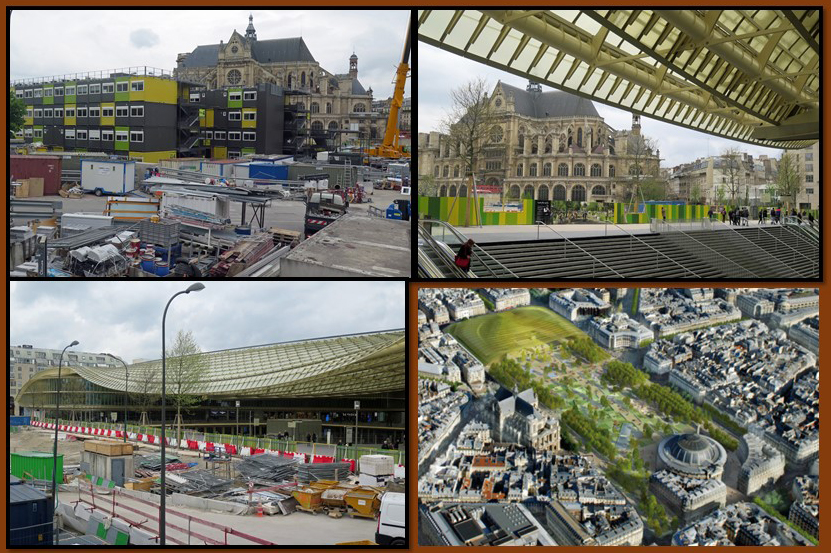
I have already talked about "Les Halles" several times on my blog (see here) - the long history, how the place was remodeled in the 1870’s and then again in the 1970-80’s… and now once more. The work is in progress – should be completed next year. For the moment “La Canopée”, supposed to remind us of a natural canopy, is finished. (Some pigeons seem to appreciate.)


The really more natural part of the park with trees and pathways has still to be done...

… and the necessary remodeling and refreshing of the underground shopping centre (with cinemas, libraries, swimming-pool… and a complicated network between different metro lines..) is still ongoing. 

2.5.16

Walpurgis night


Certain European countries celebrate, in different ways, the Walpurgis Night, April 30. In Sweden it’s today rather a way to welcome the spring. It involves some singing, drinking… and watching a fire.

It’s celebrated each year at the Swedish House, one of the 37 international houses in the Cité Universitaire – the Paris University Campus (I wrote about it here).

We were welcomed by the director of the Swedish House, Åsa Ekwall. The Swedish Ambassador, Veronika Wand-Danielsson welcomed the spring and we also made a hurrah for the 70th birthday of the Swedish King.


The crowd had the pleasure of listening to a couple of spring songs…


… awaiting the daylight to fade... and the fire.  

28.4.16

Brittany (5)


A last report from my trip to Brittany.

Starting with La Roche-Bernard. This nice little town, some 20 km (12 miles) from the sea, on the river Vilaine, was obviously founded by a Viking, Bern-hart (meaning strong, brave as a bear) in 919 as a strategic defensive place. The successors remained and swore allegiance to the Duke of Brittany. It was a rather important commercial port with a shipyard for a few centuries, until the arrival of the railway. Today it offers a nice marina. 

  
Next stop was at Guerande with its medieval fortified walls. 

The city overlooks large salt marshes and Guerande salt is famous. Salt has been produced here since the Iron Age. You must obviously wait until a warmer part of the year to find the thousands of ponds getting white. Especially famous is of course the “Fleur de Sel” (flower of salt), harvested sunny summer afternoons.  

Then we continued the trip along the rough coastline, “La Côte Sauvage”

… on the way to the little town Croisic. Artists have worked a lot around these places. Here we can see a water-colour by Paul Signac (1865-1935) from 1928.

We made a quick passage via La Baule, since the end of the 19th century a famous seaside resort with its 12 km (7.5 miles) long sand beach. The seafront, where you used to find a large number of private villas is now almost full of nothing but hotels and more modern residences - you still find some old, nice, villas behind the seafront.

Behind La Baule, Guerande and just north of the Loire estuary … you find La Grande Brière (The Brière Marsh), a patchwork of streams, reed beds, water meadows and hillocks (see top picture). It used to be occupied by people who were hunting, fishing, cutting reeds, digging peat… Today it’s of course more dedicated to leisure, tourism… The 6.850 hectares are commonly owned and governed by the 21 small villages on and around the marshland. The specific flora and fauna are protected as well as possible.  


Before closing the Brittany file, maybe some examples of nature from a - then - still early spring.